

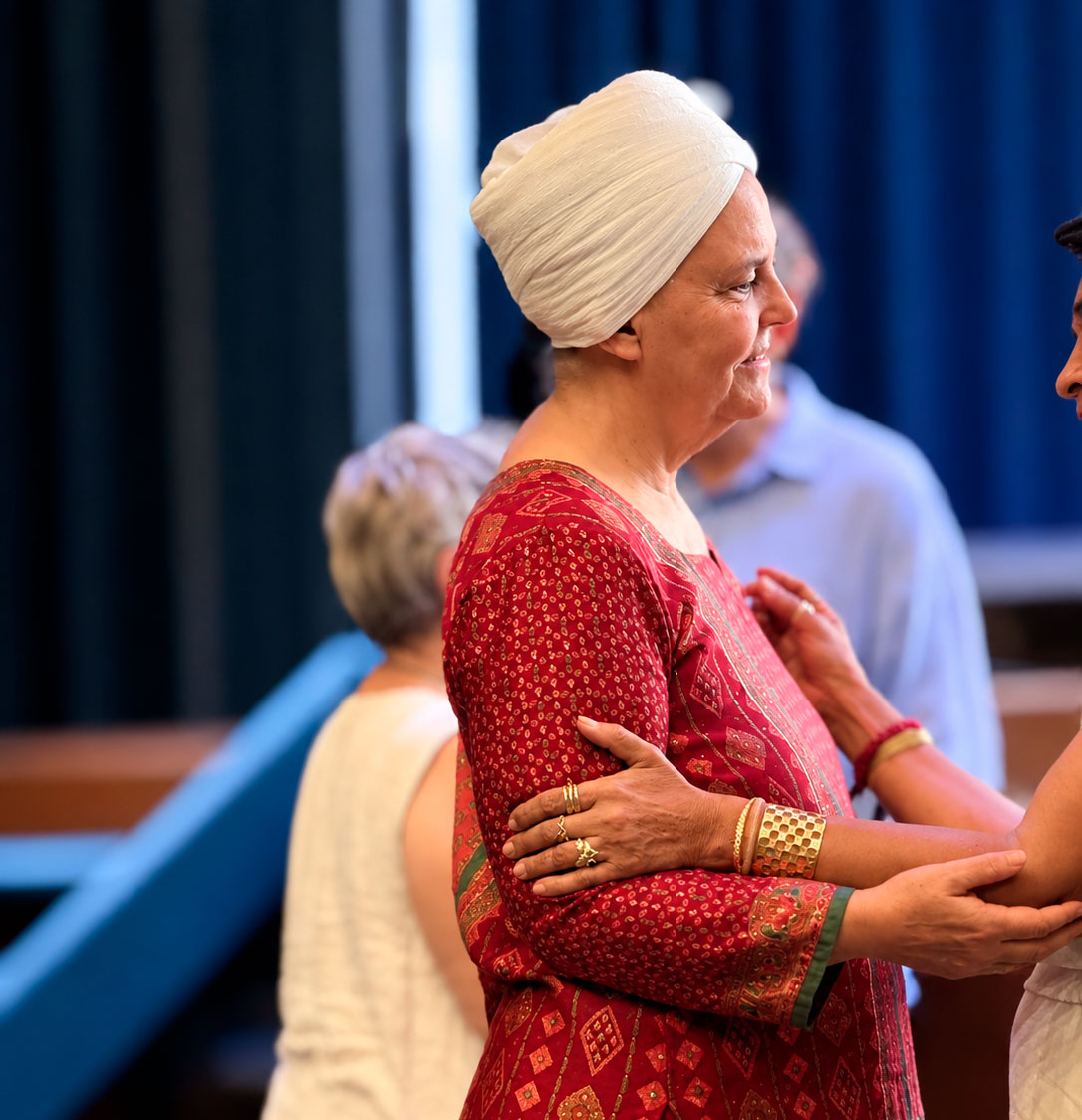

FEB 6-7. 2027 | A two-day experiential workshop with Sat Dharam Kaur
Sat Dharam Kaur
Moving through Trauma
Embodied Practices for Therapists
Trauma lives in the body: in muscle tone, posture, breath, visceral sensations, conditioned movement and the state of the nervous system. Often, words alone can’t reach it. This workshop gives therapists practical, body-based tools to help clients feel safe in their bodies, regulate their nervous system and process what happened without being overwhelmed. Sat Dharam Kaur has worked alongside Dr. Gabor Maté since 2012 and helped shape his work into the Compassionate Inquiry training. Here she brings together more than 45 years of teaching movement and breath with her clinical experience in trauma.
Practical information
- Saturday 6 and Sunday 7 February 2027 · 9:30 to 19:30
- Seven Dance · Carrer Perill 10, Barcelona
- Taught in English, with optional simultaneous translation into Spanish (+€10)
- Early bird €199 (first 25 places) · General registration €247
- Bring comfortable clothes and your mat · No prior yoga experience needed
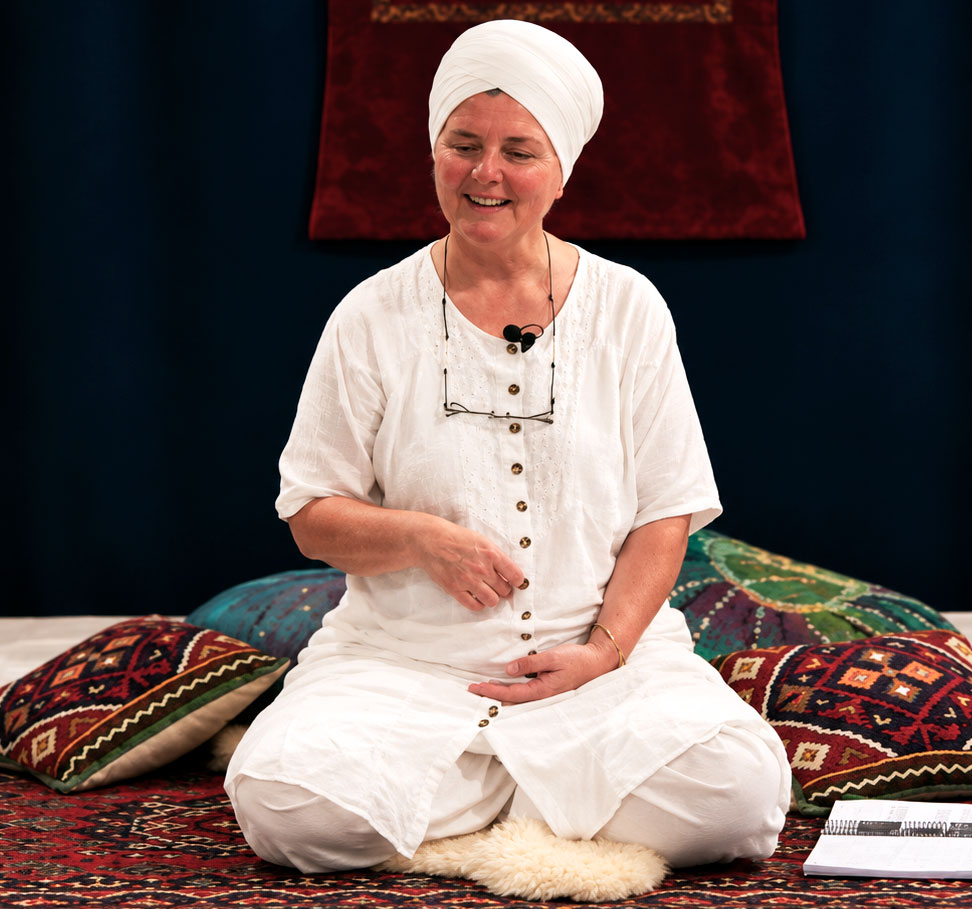
Movement as a path to safety and healing
Movement is one of the most direct ways to create safety. Mindful, rhythmic movement helps clients reconnect with their bodies, increase body awareness, release held defensive energy and chronic tension, and recover a sense of agency. Applied with care, it regulates the autonomic nervous system, widens the window of tolerance and builds resilience. This creates the conditions to process traumatic experience safely.
An experiential somatic training
This is an experiential training. You’ll practise everything yourself first, then learn how to adapt it for clients. Drawing on neuroscience, polyvagal-informed frameworks, somatic psychotherapy and yoga, Sat Dharam will guide you through:
- breath practices for different nervous system states
- rhythmic movement sequences to create safety and regulation
- grounding, orienting and self-touch
- hand positions (mudras), meditation and optional mantra
Each tool is framed within a clear neurobiological and psychotherapeutic model, so you understand why it works and when to use it.
What participants will learn
This experiential workshop introduces trauma therapists to somatic approaches for nervous system regulation, interoceptive awareness, integration, and embodied presence in clinical practice. Drawing on neuroscience, polyvagal-informed frameworks, somatic psychotherapy, and yoga practice, the training explores how trauma is stored and expressed through autonomic dysregulation, movement patterns, breath, and internal body states, and how it can be healed
Trauma-informed techniques
The workshop integrates trauma-informed techniques—such as breath regulation, rhythmic movement sequences, self-touch, optional mantras, and meditations —framed within a neurobiological and psychotherapeutic model.
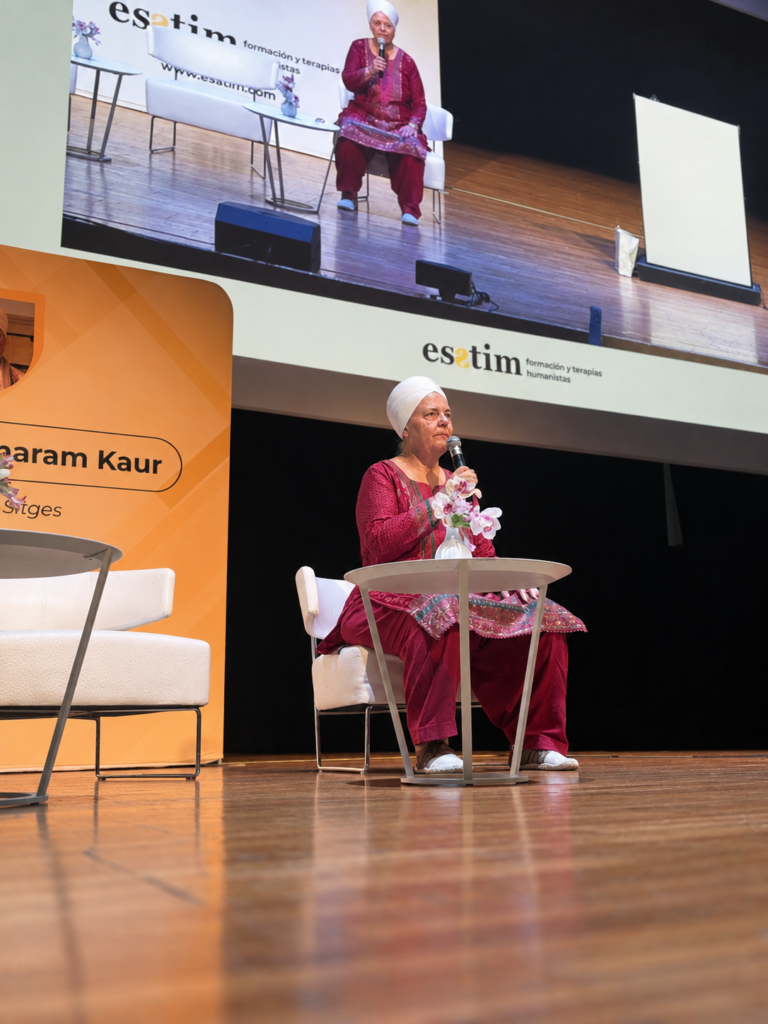
Who is this workshop for?
Psychotherapists, psychologists, counsellors, social workers, body workers, yoga teachers, doctors and other health professionals who want to bring the body into their clinical work. No previous yoga experience is needed.
Objectives
1. Trauma and Nervous System Literacy
Describe core principles of autonomic nervous system regulation relevant to trauma recovery. Differentiate sympathetic activation, dorsal vagal shutdown, and ventral vagal regulation states. Identify somatic markers of dysregulation in themselves and clients
2. Somatic Tracking Skills
Apply interoceptive tools to support clients in noticing and naming sensations and emotions Guide clients in orienting, grounding, breath and movement practices to widen the window of tolerance. Recognize subtle signs of autonomic shift during therapeutic sessions
3. Trauma Movement and Breath Work
Facilitate breathing practices to support various nervous system states. Integrate repetitive, rhythmic movement-based interventions to create safety and regulate the brainstem. Use movement to integrate brain hemispheres Use hand positions (mudras) for specific effects.
4. Enhance Emotional Awareness and Expression
Support clients in acknowledging, experiencing and expressing emotions. Follow the body’s movement patterns to facilitate release through movement. Identify when somatic practices may be contraindicated or require modification.
5. Enhance Self-Regulation for Therapist and Client
Learn maintain embodied presence in clinical practice. Recognize countertransference signals in the therapist’s own body. Use meditation and mantra for centering and reconnecting with oneself. Develop a personal toolkit of self-regulation practices.
Limited places
Two days of body-based practice with Sat Dharam Kaur in Barcelona.
Early bird €199 for the first 25 places.
About Sat Dharam Kaur
A naturopathic doctor and mind-body practitioner
Sat Dharam Kaur has been practicing as a naturopathic doctor since 1989, with a focus on women’s health, cancer and mind-body approaches to healing.
Her work with Dr. Gabor Maté
Sat Dharam has been studying, hosting, working and teaching with Dr. Gabor Maté since 2012, and structured his work in a format that could be taught to others, which is now the Compassionate Inquiry Professional Online Training. Since 2019, much of her naturopathic practice has included Compassionate Inquiry.
Education and teaching background
Her educational background includes a BA with a major in psychology and English literature, and a B.Sc. in biology from the University of Guelph, Ontario, Canada. She completed postgraduate studies in naturopathic medicine at the Canadian College of Naturopathic Medicine in Toronto and taught stress management and women’s health at the Canadian College of Naturopathic Medicine for 10 years. She has written three books on women’s health and has presented at numerous conferences.
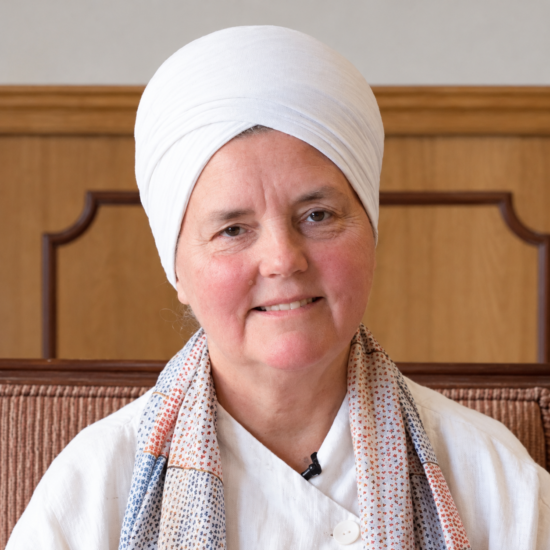
Kundalini Yoga and trauma-informed teaching
Sat Dharam is an expert instructor in Kundalini Yoga, which she has practiced and taught for over 45 years. She has developed yoga-based curriculums in addiction recovery, trauma and breast health and trains teachers globally in those specialties.
Personal life
Sat Dharam lives with her husband in an off-grid home on 105 acres of beautiful land and takes care of fruit trees and a large garden. She enjoys hiking, cycling, and communing with plants. She has three adult children and two grandchildren.
Días
Horas
Minutos
Book your place
Early bird €199 for the first 25 places, then €247.
Taught in English, with optional simultaneous translation into Spanish (+€10).
Frequently asked questions
What language is the workshop taught in?
Sat Dharam Kaur teaches the workshop in English. When you register you can add simultaneous translation into Spanish for €10.
Do I need previous yoga or bodywork experience?
No. Each practice is explained step by step, adapted to each person, and participation is always voluntary.
Who is this workshop for?
Psychotherapists, psychologists, counsellors, social workers, body therapists, yoga teachers, doctors and other health professionals who want to bring the body into their trauma work.
What are the times?
Saturday 6 and Sunday 7 February 2027, from 9:30 to 19:30.
Where does it take place?
At the Seven Dance school, Carrer Perill 10, Barcelona.
How much does it cost?
Early bird: €199 for the first 25 places. General registration: €247. Simultaneous translation into Spanish is optional (+€10).
What should I bring?
Comfortable clothes and your mat.
Can I cancel my registration?
Refunds are not available, but you can transfer your place to another person by emailing events@esstim.com before the workshop starts.